
My Loverse: Interactive Story
MINDZEN AISimulation
4.397.00 Reviews
- Version
- 2.7.0
- Installs
- 50.00K
- Age Rating
- Mature 17+
Screenshots






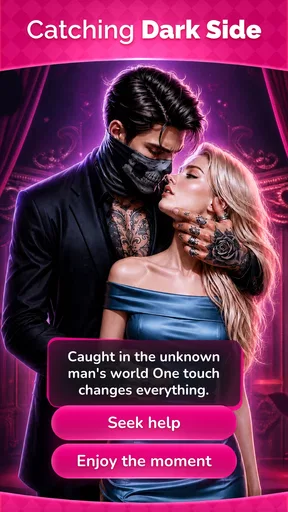

Our Review of My Loverse: Interactive Story
 Analysis by Appyee
I approached My Loverse: Interactive Story as a choice-driven simulation built around romance, personal drama, and the feeling of steering a private story rather than simply watching one unfold. Its themes include office relationships, dark romance, and Alpha-mate fiction, so this is clearly aimed at adults who enjoy emotionally charged scenarios and branching decisions. My first impression was that it works best when I treat it as a short, focused reading session: I settle in, follow the current scene, and think about which response matches the kind of story I want to create.
The game is free to start, which makes it easy to test without committing immediately. It is published by MINDZEN AI and has attracted over 50 thousand installs, with an average score of 4.3 from more than 700 ratings. Those figures suggest that the concept has found a real audience, although they do not replace personal judgment. In my experience, the appeal depends less on traditional simulation mechanics and more on whether interactive romance and mature storytelling are the kind of entertainment you already enjoy.
How the reading experience handles different needs
I find that the reading-first format can suit very different routines, but it asks for more attention than its simple controls might suggest. In this section, I focus on practical ways to make a session comfortable—from choosing a quiet moment to deciding how much emotional distance to keep from a character’s choices—before considering which readers are most likely to enjoy that balance.
Readability and navigation during a story
The most important accessibility question here is not how many controls a game has, but how comfortably I can read, pause, and make decisions. An interactive story naturally reduces the need for rapid input. I can focus on the dialogue and scene context instead of managing a complicated control scheme, which makes this format approachable for people who find action games tiring or difficult to follow.
The choice-based structure also gives each decision a clear purpose. Rather than asking me to memorize a large set of buttons, it asks me to interpret a situation and select a response. That is a useful distinction for players who prefer cognitive engagement over reflexes. The experience feels closer to guided reading with game-like consequences than to a conventional simulation with maps, resource bars, or constant movement.
Still, interactive fiction places a different demand on the reader: sustained attention. A missed line can change how I understand a character or why a decision matters. I found it better to play when I was not multitasking. If I tried to skim while checking messages, the emotional logic of a scene became less effective, and a choice could feel less informed.
For readers who need larger text, stronger contrast, text-to-speech support, or a specific reading layout, I would check the current in-game presentation before investing time or money. I would not assume that a story app automatically includes every reading aid. The practical test is simple: can you comfortably read a complete scene on your device, identify each response, and return to the story without strain?
Navigation is likely to feel most natural to people who already understand the habits of mobile story games. Newcomers may initially wonder whether a choice is merely conversational or likely to influence the direction of the relationship. I recommend slowing down at important moments and reading the surrounding dialogue rather than selecting the first answer that sounds attractive. That small habit makes the experience feel more intentional.
Motor and sensory considerations
From a motor perspective, a dialogue-led game is generally less demanding than a game based on timing, aiming, or fast repeated taps. I do not need precise movement or quick reactions to enjoy the central appeal. That makes it a reasonable option for someone who wants a relaxing game format or who finds action controls uncomfortable.
There is still some interaction involved. Reading, selecting responses, and moving through scenes require repeated touch input, so the experience is not completely hands-off. A person with limited reach, tremor, or difficulty with small touch targets may find individual choices less comfortable than the story itself. I would use a larger device when possible and keep the phone positioned securely instead of holding it for a long uninterrupted session.
Sensory comfort is more complicated because the mature themes are part of the product’s identity. The game carries a Mature 17+ age rating, and its subject matter can include intense romance and darker emotional situations. That does not make it unsuitable for every adult, but it does mean I would not recommend opening it casually in a shared space or assuming that every scene will have a light, cozy tone.
This matters in everyday use. Imagine taking a break at work and starting an office-romance chapter with the sound turned on. Even if the interaction is simple, the subject matter may be awkward around colleagues. I found it more sensible to play privately, with notifications and audio considered beforehand. The game is better suited to a personal evening routine than to a public waiting-room distraction.
Players sensitive to conflict, possessive romance, power imbalances, or emotionally dark themes should approach carefully. The labels around the game give a useful warning about its intended audience, but they do not tell every player how a particular scene will feel. If you know that certain romance tropes are uncomfortable for you, this is one of those cases where the premise deserves as much attention as the gameplay.
When the format works best in real life
I see the strongest use case as a flexible, private reading break. You might play a scene during a commute, before bed, or while waiting for an appointment, then stop when your attention is needed elsewhere. Because the core interaction is based on narrative choices rather than real-time competition, it does not punish you for taking a pause in the same way an action game would.
That flexibility is useful for adults with irregular schedules. A long gaming session is not required to understand the appeal. I can treat each visit as a small chapter in an ongoing relationship story. On the other hand, if you want a game that rewards mastery, coordination, exploration, or strategic planning, this format may feel too passive. The simulation label should not make you expect a detailed life-management system; the main activity is deciding how the story should proceed.
The different themes also make it easier to choose a mood. An office setting may suit someone who wants contemporary relationship tension, while dark-romance material is intended for a heavier atmosphere. The Alpha-mate angle points toward a more specific romance tradition, so readers who dislike genre conventions or prefer realistic, understated relationships may not connect with it.
I would also recommend deciding in advance how you want to play emotionally. One approach is to choose answers that resemble your own values. Another is to deliberately create a character who makes bolder or more dramatic decisions. The second approach can make the game more interesting, but it also increases the chance that a scene will move in a direction you personally would not choose. That is not a flaw in interactive fiction; it is the trade-off for having agency.
Where the free entry point becomes less simple
The game is free, but it includes optional purchases ranging from $1.99 to $199.99 per item. That range deserves attention before anyone begins spending. Free access is helpful for testing the writing style and deciding whether the stories hold your interest, but a player who wants to unlock more content or make progress more freely may encounter pressure to pay.
My practical advice is to treat the first sessions as an evaluation period. Notice whether you enjoy the scenes without needing every premium option. If the basic experience already feels satisfying, the game can remain a casual free pastime. If you quickly feel that the best choices or most appealing developments are being placed behind purchases, set a personal limit before continuing.
This is especially important for younger members of a household, even though the game is intended for mature players. I would not hand it to a child simply because the initial download costs nothing. The age rating, romantic themes, and purchase range make it something adults should manage deliberately on a shared device.
Another trade-off is replay value. Interactive stories invite me to imagine alternative choices, but replaying only feels worthwhile when I care about the characters and want to see another outcome. If you prefer a clearly defined beginning and ending, repeated decisions may feel like extra work. If you enjoy comparing emotional paths, the format can keep a single premise interesting for longer than a linear short story.
Remaining barriers I would consider first
The biggest barrier is genre fit. This is not a neutral storytelling tool or a general-purpose simulation. It is built around romance, including darker and more specialized themes. Someone looking for family-friendly fiction, comedy without emotional intensity, or a conventional strategy game should skip it rather than hoping the label means something broader.
The second barrier is reading stamina. Even though the controls are uncomplicated, the experience still asks me to process dialogue, remember relationships, and make choices with incomplete information. Players who prefer visual action may lose interest, while readers who enjoy character tension may find that same slower pace appealing.
A third issue is privacy in the everyday sense. Mature romance is personal entertainment, and the game may be uncomfortable to display in a public or family setting. I would choose when and where to play with the same care I would use for a mature novel or television series. That situational awareness is part of making the app work well, especially for people who share a phone or tablet.
There is also a version and device question worth handling sensibly. The current version is 2.7.0 and requires Android 10 or later, so Android users on older systems should check compatibility before planning around it. That requirement does not tell me how the game feels on every screen size or device configuration, which is why I would test the basic reading experience before considering purchases.
Compared with a traditional romance novel, the game gives me more ownership over the protagonist’s responses, but it may feel less polished or predictable than reading a finished book from beginning to end. Compared with a visual novel, it emphasizes mobile-friendly choices and relationship progression rather than demanding extensive exploration. Compared with a life simulator, it is much narrower: the emotional storyline is the point, not managing an entire virtual routine.
Who I would recommend it to
I would recommend this game to an adult reader who likes romance with direct participation. It is a good match if you enjoy asking, “What would I say here?” and then living with the tone that choice creates. It also suits people who want a low-reflex game that can fit into short private sessions.
I would be more cautious recommending it to someone who needs advanced reading customization, dislikes mature relationship themes, or expects a deep simulation with extensive systems. In those cases, a standard e-reader, a linear romance title, or a more mechanics-focused simulation would probably be a better choice. The right alternative depends on whether your priority is accessibility control, literary depth, or gameplay complexity.
One useful way to decide is to identify what you want from the next half hour. If you want to relax with a dramatic relationship scenario and make a few meaningful responses, this game is pointed in the right direction. If you want competition, exploration, or a clear skill challenge, downloading it may only create disappointment.
My inclusive verdict
My Loverse: Interactive Story has a relatively approachable control concept because it centers on reading and choosing rather than fast physical action. That gives it a welcome place among mobile games for adults who prefer calm interaction, flexible sessions, and narrative focus. Its accessibility strengths are practical rather than universal: fewer reflex demands do not automatically solve text, touch, sensory, or privacy needs.
I appreciate that the premise is clear enough to attract a specific audience, but that clarity also sets boundaries. Mature romance, darker themes, optional purchases, and a reading-heavy structure are not minor details; they determine whether the game feels comfortable and worthwhile. I would start free, play privately, read carefully, and avoid spending until I knew the stories genuinely held my attention.
Overall, I see it as a focused interactive romance experience rather than an all-purpose simulation. For the right adult player, that focus is its strongest quality. It offers a simple way to step into office drama, dark romance, or Alpha-mate fiction and make the protagonist’s responses feel personal. For anyone outside that audience, the same narrow focus is a good reason to choose something else.
Verdict
Strengths of My Loverse: Interactive Story
- Branching choices make each playthrough feel personal.
- Romance routes offer varied personalities and relationship dynamics.
- Short chapters are convenient for playing during quick breaks.
- Stylish character designs make conversations visually appealing.
- Regular story updates can add fresh scenes and choices.
Limitations of My Loverse: Interactive Story
- Some choices may require premium currency to unlock.
- Story outcomes can feel limited despite the branching decisions.
- Progress may depend on waiting for tickets or energy to refill.
- Romance themes may not appeal to players seeking action-focused gameplay.
- Performance can vary on older phones during animated scenes.
Other Releases by MINDZEN AI
View All
Fantasia: Character AI Chat
Entertainment4.2
Similar Picks in This Category
View All
Truckers of Europe 3
Wanda Software4.3

Town Building Life Simulator
XGame Global4.2

Fidget Toys Trading・Pop It 3D
Freeplay Inc4.7

Sculpt People
CrazyLabs LTD4.4

Scary Teacher 3D
Z & K Games4.2

Hair Tattoo: Barber Shop Game
CASUAL AZUR GAMES4.3
Frequently Asked Questions
What is My Loverse: Interactive Story about?
My Loverse: Interactive Story is a romance-focused narrative game where you follow dramatic, emotional, and sometimes mysterious storylines through interactive choices. You can meet different characters, build relationships, and influence how events develop. The experience is designed for players who enjoy visual storytelling, romance fiction, character conversations, and branching decisions rather than traditional action-based gameplay.
How do choices affect the story in My Loverse?
Your decisions can influence conversations, character relationships, romantic routes, and the direction of certain scenes. Some choices may lead to different reactions or unlock particular outcomes, while others mainly shape the tone of the dialogue. Because the game is choice-driven, it is worth reading each option carefully before selecting it, especially during important relationship moments.
Is My Loverse: Interactive Story free to download and play?
The application can generally be downloaded for free, but free access may not include every story chapter, premium conversation, or special choice. Like many interactive romance games, it may offer optional in-app purchases, advertisements, or limited resources used to continue reading. Before downloading, check the store listing and purchase settings so you understand which content may require payment.
Does My Loverse require an internet connection?
An internet connection may be needed for downloading story content, synchronizing progress, displaying advertisements, processing purchases, or receiving updates. Some previously loaded scenes might work temporarily offline, but this should not be assumed for the entire game. For the smoothest experience, use a stable Wi-Fi or mobile-data connection and keep the application updated.
Is My Loverse: Interactive Story suitable for all ages?
The game is primarily aimed at players who enjoy romance and relationship-focused fiction, but its suitability depends on the themes and content included in the available stories. Some chapters may contain mature romantic situations, emotional conflict, or suggestive dialogue. Parents and younger players should review the age rating, content descriptors, and privacy information on the relevant Android or iOS store before installing it.
Play our best games!


